
Propiedades físicas de sustratos, base de los sistemas agrícolas urbanos
Article Sidebar
Main Article Content
Abstract
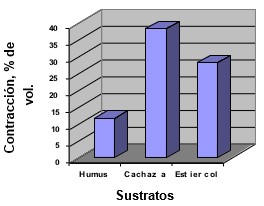
In the same way that the soils physics is the basis of the improvement of the soils, the substrates physics constitutes the essence of the success of the urban agricultural systems. The organic matter, main component of the substrates, is rich in nutritious, and so that the cultivations assimilate the same ones appropriately, it is required a good correlation of the solid, liquid and air phases. The physical characteristics were determined (density of the solid phase, bulk density, porosity, bulk contraction and hidro-physical (properties of retention of water) to substrates and its combinations, commonly used in organopónicos, intensive orchards, houses of production of postures and ornamental, fruit-bearing and forest viveros. It´s showed, the worm humus and the coconut fiber have good results in what concerns to the good thresholds of air and easily available water. In the mixtures with soils, as the content of organic matter increased, it diminished the density of the solid phase and the retained water was increased. The curves of retention of humidity are the reflection of the physical behavior of the substrates. It is recommended to improve the institutional capacity of the laboratories of physics of soils and substrates to perfect the system of urban agriculture in the country.
Article Details

This work is licensed under a Creative Commons Attribution-NonCommercial 4.0 International License.
Those authors who have publications with this journal accept the following terms of the License Attribution-NonCommercial 4.0 International (CC BY-NC 4.0):
You are free to:
- Share — copy and redistribute the material in any medium or format
- Adapt — remix, transform, and build upon the material
The licensor cannot revoke these freedoms as long as you follow the license terms.
Under the following terms:
- Attribution — You must give appropriate credit, provide a link to the license, and indicate if changes were made. You may do so in any reasonable manner, but not in any way that suggests the licensor endorses you or your use.
- NonCommercial — You may not use the material for commercial purposes.
- No additional restrictions — You may not apply legal terms or technological measures that legally restrict others from doing anything the license permits.
The journal is not responsible for the opinions and concepts expressed in the works, they are the sole responsibility of the authors. The Editor, with the assistance of the Editorial Committee, reserves the right to suggest or request advisable or necessary modifications. They are accepted to publish original scientific papers, research results of interest that have not been published or sent to another journal for the same purpose.
The mention of trademarks of equipment, instruments or specific materials is for identification purposes, and there is no promotional commitment in relation to them, neither by the authors nor by the publisher.
How to Cite
References
Calderón Saenz, F. y F. Cevallos. (2003). Sustratos. Tomado de Internet
http://www.drcalderonlabs.com/index.html
Iskander Cabrera, R. (2002). Manejo de sustratos para la producción de plantas ornamentales en macetas. Tomado de Internet http://www.uaaan.mx/academic/Horticultura/Memhort02/Ponencia06.pdf.
Orellana Gallego, R. y J. M. Moreno. 2004. Manual de procedimientos de métodos de ensayos físicos para sustratos orgánicos. XV Forum de Ciencia y Técnica, 15 pp.
Pérez Domínguez, C.T., T. Tellería, R. Jiménez. 1989. Cultivos Hidropónicos. Elementos Tecnológicos. Ed. CIDA, La Habana.