
Management of seed production in traditional farms of Cuba
Article Sidebar
Main Article Content
Abstract
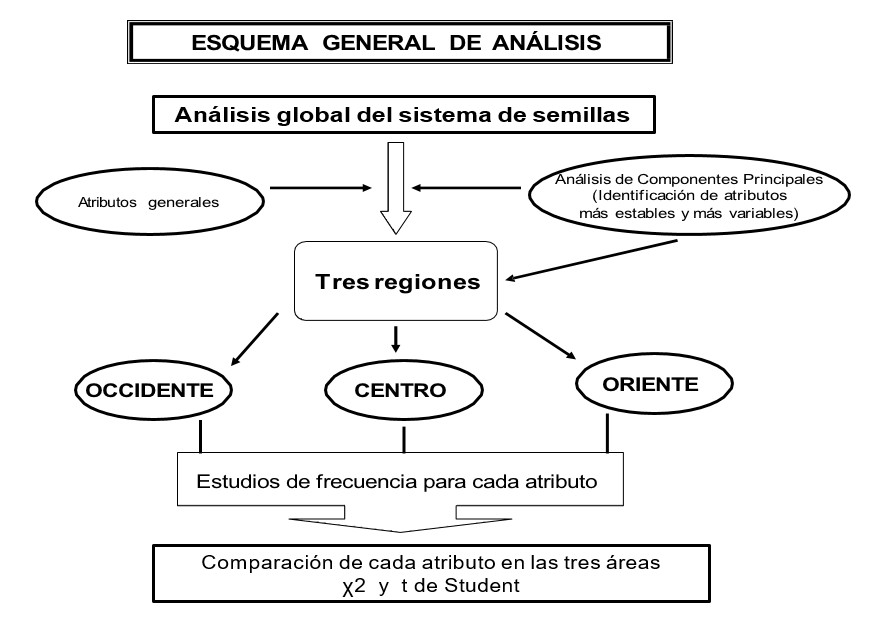
In situ conservation of traditional cultivars, requires of an informal seed production system, in agreement with the system of sustainable agriculture, based on traditional practices and on a higher participation of farmers in this system. The general objective of this paper was to know the general characteristics of the informal seed system in Cuban home gardens, and its implications in the conservation of agrobiodiversity. A sample of 39 home gardens was selected in three regions of Cuba, taking into account criteria about diversity and socio-economic factors. For the study of the general characteristics of the seed systems in the three regions, as well as the analysis in each area, the most important attributes were selected. The data were processed considering main components and frequency analysis. The results showed that, the informal seed systems presented stable attributes that typefaces them in a general manner in the country, and more variable attributes that distinguish the different regions and home gardens. The regions with more similarity were Pinar del Río and Guantánamo. It was observed a strong tendency of the farmer, which integrated the selected sample, to produce their own seeds. It was identified that, in general, the fundamental restrictive aspect of the conservation of the reproductive material (in particular the seed) was the lack of appropriate containers. Significant differences were also observed among the studied areas in relation to the proportion of species with higher infraspecific variability
Article Details

This work is licensed under a Creative Commons Attribution-NonCommercial 4.0 International License.
Those authors who have publications with this journal accept the following terms of the License Attribution-NonCommercial 4.0 International (CC BY-NC 4.0):
You are free to:
- Share — copy and redistribute the material in any medium or format
- Adapt — remix, transform, and build upon the material
The licensor cannot revoke these freedoms as long as you follow the license terms.
Under the following terms:
- Attribution — You must give appropriate credit, provide a link to the license, and indicate if changes were made. You may do so in any reasonable manner, but not in any way that suggests the licensor endorses you or your use.
- NonCommercial — You may not use the material for commercial purposes.
- No additional restrictions — You may not apply legal terms or technological measures that legally restrict others from doing anything the license permits.
The journal is not responsible for the opinions and concepts expressed in the works, they are the sole responsibility of the authors. The Editor, with the assistance of the Editorial Committee, reserves the right to suggest or request advisable or necessary modifications. They are accepted to publish original scientific papers, research results of interest that have not been published or sent to another journal for the same purpose.
The mention of trademarks of equipment, instruments or specific materials is for identification purposes, and there is no promotional commitment in relation to them, neither by the authors nor by the publisher.
How to Cite
References
Castiñeiras, L., Z. Fundora, T. Shagarodsky, O. Barrios, V. Moreno y R. Cristóbal(2002). Contribution of home gardens to in situ conservation of plant genetic resources – Cuban Component. En: Watson, J. W. and P.B. Eyzaguirre, editors. 2002. Proceedinngs of de Second International Home Gardens Workshop: Contribution of home gardens to in situ conservation of plant genetic resources in farming systems, 17 –19 July 2001, Witzenhausen, Federal Republic of Germany. International Plant Genetic Resources Institute, Rome. ISBN 92-9043-517-8.
.Fernández, P. G., 1994. Indigenous seed practices for sustainable agriculture. Indigenous knowledge and development monitor. 2(2): 9-12.
IPGRI, 1998. Material de Apoyo a la Capacitación en Conservación ex situ de Recursos Fitogenéticos. Pp 18 – 20.
IPGRI, 2000. Informe anual 1999. Instituto Nacional de Recursos Fitogenéticos, Roma. Pp 22-23. ISBN 92-9043-460-0
Raymond, R. 1994. El hombre y las plantas: La agenda para el desarrollo. El programa de Recursos Fitogenéticos del CGIAR. IPGRI, Roma, Italia, 1994. Pp 3 -5.