
Behavior of the mites in tomato culture and measures for their control, at houses of protected cultivation.
Article Sidebar
Main Article Content
Abstract
Bronzed in tomato culture is a damage caused by an eriophyoid mite, Aculops lycopersici Massé of very small size, yellowish and invaluable at simple sight. The symptoms characterise for bronzed or rust in the first shaft and leaves and even in fruits, from the basal part of the plant in upward evolution. With the development of this a drying of the leaves takes place. Among of the mite species that cause more
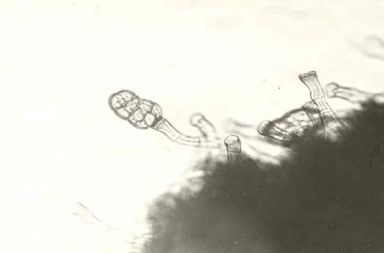
damages of economic importance in tomato, it is besides this to Polyphagotarsonemus latus Banks also well known as “white mite." With the objective to know the behaviour of these mites and their possibilities of control with less aggressive methods to the environment, it was carried out this study in the houses of protected cultivation, in sow of spring and summer seasons. Tomato seedlings were sowed (Hybrid HA-3108), in three different dates 15-4-03, 13-6-03 and 14-8-03. The plants were evaluated weekly from 17 to 35 days after the transplant. The number and species of mites per leaf, as well as climatic conditions surrounding tomato culture were recorded. Finally, correlation and linear regression analysis were carried out between mites’ infestation (% for each species) and climatic factors. Aculops lycopercisi was presented with more intensity, the attack of this mite caused damages of consideration that ended up in occasions to destroy great quantity of plants in the crop stage and to damage the fruits, this happened mostly in the hot periods from March until September. Was observed on this mite the attack of the pathogenic fungus Hirsutella thompsonii in the humid times. In the freshest periods also appeared the white mite P. latus but their damages were less important. Less aggressive control methods were recommended zineb and sulphur in powdered, preventive measures and a monitored methodology to evaluate and apply the mites under these conditions.
Article Details

This work is licensed under a Creative Commons Attribution-NonCommercial 4.0 International License.
Those authors who have publications with this journal accept the following terms of the License Attribution-NonCommercial 4.0 International (CC BY-NC 4.0):
You are free to:
- Share — copy and redistribute the material in any medium or format
- Adapt — remix, transform, and build upon the material
The licensor cannot revoke these freedoms as long as you follow the license terms.
Under the following terms:
- Attribution — You must give appropriate credit, provide a link to the license, and indicate if changes were made. You may do so in any reasonable manner, but not in any way that suggests the licensor endorses you or your use.
- NonCommercial — You may not use the material for commercial purposes.
- No additional restrictions — You may not apply legal terms or technological measures that legally restrict others from doing anything the license permits.
The journal is not responsible for the opinions and concepts expressed in the works, they are the sole responsibility of the authors. The Editor, with the assistance of the Editorial Committee, reserves the right to suggest or request advisable or necessary modifications. They are accepted to publish original scientific papers, research results of interest that have not been published or sent to another journal for the same purpose.
The mention of trademarks of equipment, instruments or specific materials is for identification purposes, and there is no promotional commitment in relation to them, neither by the authors nor by the publisher.
How to Cite
References
CNSV- 2002. MINAGRI. Programa de defensa fitosanitaria para casas de cultivos protegidos, tomate, pimiento, melón y pepino. 52p.
Htpp:/www.infoagro.com/hortalizas/ácaros-plaga. 2004. Manejo de ácaros plagas.
Jeppson, H.; Keifer,H. ; Baker, E.W. .(1975): Mites injurious of economic plants.
University of California. Press Berkeley Los Ángeles. pp. 614.
Livschitz, I.S.; Salinas Crochet, A. 1968. Preliminares acerca de los ácaros tetránicos de Cuba. Centro Nacional Fitosanitario ,149 p.